What Are Spider Veins and Telangiectasias?
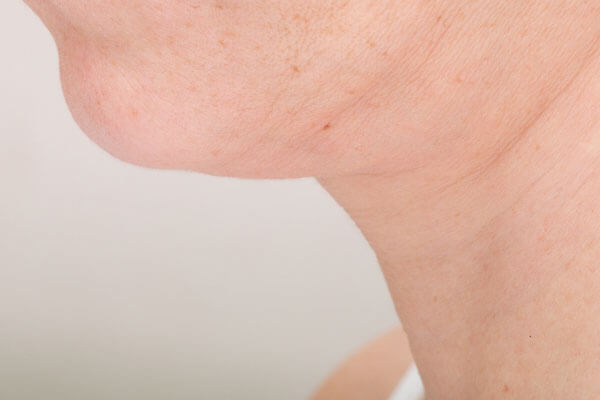
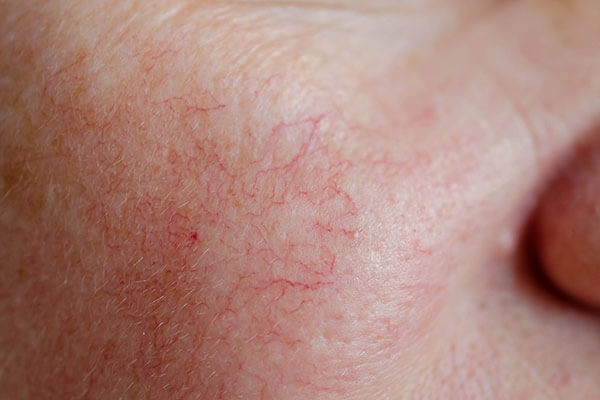
Telangiectasias are tiny blood vessels — usually less than one millimeter across — that have widened and become visible through the skin. On the face, they commonly appear on the cheeks, around the nose, and on the chin, often linked to genetics, sun exposure, rosacea, and age. On the legs, they tend to cluster on the thighs, calves, and ankles, driven by genetics, hormones, prolonged standing, and the daily work of gravity.
Spider veins are usually harmless, though some patients notice stinging or aching around leg veins. They are a cosmetic concern for most people — but visibility is exactly the problem. The good news is that these vessels respond well to laser treatment.
One important medical note: laser treatment is designed for small, superficial vessels — the cosmetic spider veins and reticular veins close to the surface. It does not treat underlying venous disease. If you have large varicose veins, significant leg pain or swelling, or skin changes around your ankles, you may need a medical vein evaluation first, and we will tell you so.
How Laser Treatment Fades Spider Veins
Vascular laser treatment works on a simple, elegant principle: the laser emits light at wavelengths that are preferentially absorbed by hemoglobin — the red protein inside blood vessels. When the laser light hits the vessel, it converts to heat, causing the vein to coagulate and collapse. The destroyed vein is then gradually absorbed by your body and fades from view. Because the light energy is concentrated in the vessel rather than the surrounding tissue, the skin itself is protected.
Different vascular concerns respond to different approaches: facial capillaries, leg spider veins, and other small vessels vary in depth, size, and the wavelengths that treat them best — as Alma’s vascular treatment overview describes for vascular laser platforms generally. The Alma Harmony platform integrates multiple laser and light-based technologies, and which specific approach is available and appropriate for your vessels is confirmed at your consultation.
What Treatment Is Like
Your treatment begins with a consultation at our Tempe office. We will examine your veins, review your medical history (including any clotting disorders, deep vein thrombosis history, or vascular conditions), and confirm that your veins are the small cosmetic type that laser treatment addresses.
On treatment day:
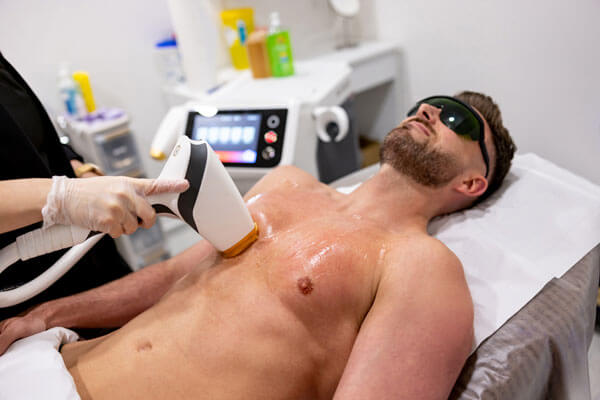
- The skin is cleansed and protective eyewear is worn
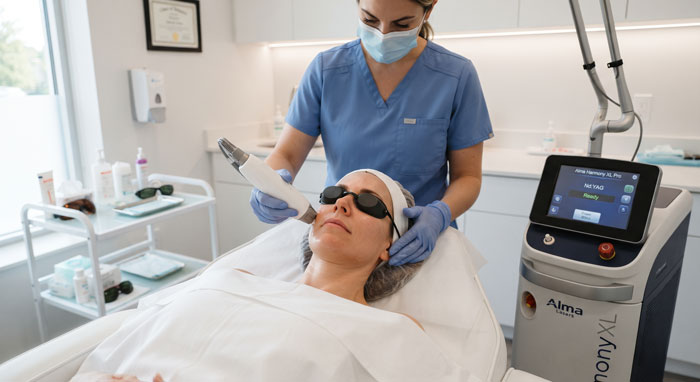
- The laser handpiece is calibrated to your vessel size, depth, and skin tone, then passed over the treatment area
- You will feel brief warm or snapping sensations with each pulse — most patients describe it as a rubber band flick — aided by contact cooling built into modern systems
- Sessions are short: 10 to 30 minutes depending on the area treated
There are no needles, no incisions, and no anesthesia required for most patients. It is a genuinely non-invasive, walk-in-walk-out treatment.
Ideal Candidates
You may be an ideal candidate for laser spider vein treatment if you:
- Have visible spider veins or broken capillaries on the face (cheeks, nose, chin) or legs
- Have small reticular (blue/purple) leg veins near the surface
- Are bothered by diffuse facial redness or rosacea-related vessels
- Have realistic expectations: most patients need a series of sessions for substantial improvement, and new vessels can form over time
- Have no active skin infections or open wounds in the treatment area
- Are not pregnant or breastfeeding
- Have no untreated deep vein thrombosis, clotting disorders, or significant varicose veins requiring medical vein care
Laser treatment is accessible to a wide range of patients precisely because it is minimally invasive — but it is not right for everyone, and a medical consultation is how we make that determination.
Results: What to Expect and When
Results follow two general patterns, as the American Academy of Dermatology describes: small spider veins may disappear immediately after treatment, while larger treated veins typically darken and may look more prominent for a period before the body absorbs them — expect visible fading over one to three months.
A series of treatments — commonly three to six sessions spaced three to five weeks apart — is often needed for substantial clearing. Treated vessels generally do not reappear, but new ones can form over time, particularly with continued sun exposure, hormones, or standing occupations. Maintenance sessions and diligent sun protection help preserve results.
Downtime and Aftercare
Downtime is minimal. After treatment, some redness, swelling, or mild bruising around the treated vessels is normal and typically resolves within days. Most patients return to work and normal activities the same day or the next, per AAD guidance. Less common risks include temporary pigmentation changes, and — rarely — burns, blisters, or scarring; your provider will review your individual risk factors at consultation.
Aftercare guidance includes:
- Protecting the treated area from the sun for three to four weeks — sunlight can cause dark marks on healing treated skin
- Wearing compression stockings for a short period after leg vein treatment, if directed
- Avoiding hot baths, saunas, and vigorous leg workouts for a few days after leg treatment
- No picking or rubbing the treated skin
Why Choose Heavens Medical in Tempe?
Laser vein treatment requires medical judgment: identifying which vessels are safe cosmetic targets, choosing the correct wavelength for the vessel and skin type, and ruling out underlying vein disease that needs a different kind of care. At Heavens Medical, PLC in Tempe, Arizona, your treatment takes place in a physician-led medical practice where Dr. Jason Heavens, a board-certified family physician with over 25 years of experience, provides medical oversight of the practice. We care for patients from Tempe, Mesa, Chandler, Gilbert, Phoenix, and across the East Valley — with the same individualized, evidence-based approach that guides everything we do.
Spider Vein Treatment FAQs
Most patients feel brief warm or snapping sensations with each laser pulse, well tolerated with contact cooling. No anesthesia is needed for most treatments.
Many patients need three to six sessions spaced three to five weeks apart, depending on the number, size, and location of the vessels. Facial capillaries often clear fastest.
Treated vessels generally do not reappear — but new ones can form over time, especially with sun exposure, hormones, or prolonged standing. Maintenance treatments and sun protection help.
No. Sclerotherapy injects a solution into the vein; laser treatment uses light energy to close it without needles. Laser treatment is often preferred for facial vessels and very small veins, while sclerotherapy can be preferred for some larger leg veins. We can discuss which approach fits your situation.
No — laser cosmetic vein treatment addresses small superficial vessels. Large varicose veins or signs of venous disease (swelling, pain, skin changes) need a medical vein evaluation, which we can help direct.
Laser vein treatment can be performed on a range of skin types with correctly selected wavelengths and settings. Darker skin tones require conservative parameters, and a test area may be recommended.