What Causes Hyperpigmentation?
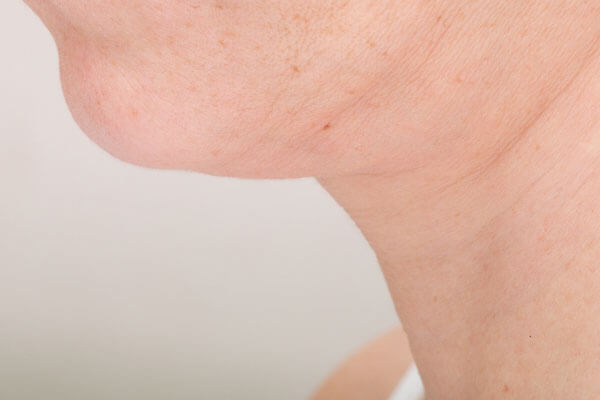
Hyperpigmentation is a general term for areas of skin that become darker than the surrounding skin. The brown color comes from melanin — the same pigment that gives your skin its color. When melanin is produced in excess or clusters unevenly, spots and patches appear. The most common types include:
- Sun spots (solar lentigines): flat brown spots caused by long-term UV exposure; they appear on the face, hands, chest, and other sun-exposed areas
- Age spots: the same sun-driven spots, so named because they multiply with age
- Post-inflammatory hyperpigmentation: dark marks left behind after acne, injuries, or other inflammation — a common concern for acne patients (see our related acne scar treatment)
- Melasma: symmetric brown patches, often on the cheeks and forehead, driven by hormones and light exposure
Why the distinction matters: sun spots and age spots respond very well to laser and light treatment. Melasma, however, is notoriously reactive — heat and light can sometimes worsen it — so melasma requires a careful, conservative, medically guided approach. This is one of many reasons a proper evaluation before treatment is essential.
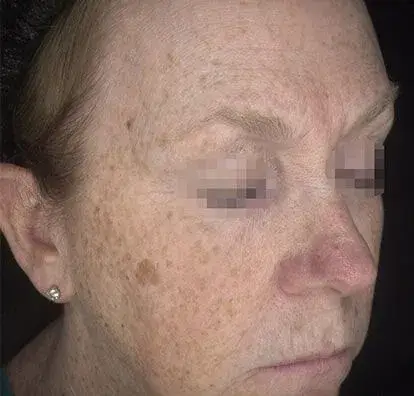
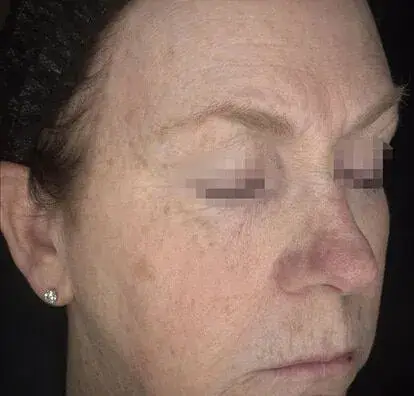
How Laser and Light Treatment Fades Pigmentation
Laser and IPL (intense pulsed light) treatments target the excess pigment in the skin, though they work somewhat differently. Pigment-targeting lasers deliver focused light that fragments the concentrated melanin in the spot into smaller particles your body gradually clears away. IPL bathes the area in broad-spectrum light that heats pigment-containing tissue, prompting it to darken and flake off over the following days to weeks. With either approach, the treated spot typically darkens, crusts lightly, and then fades — leaving clearer skin behind — while the surrounding skin is largely spared. Your provider will recommend the approach that fits your pigment type and skin tone.
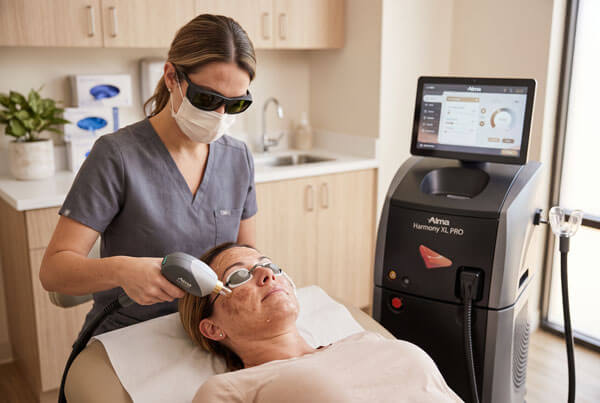
The Alma Harmony platform integrates multiple laser and light-based technologies — including IPL and non-ablative laser modalities — in a single system. That range matters for pigmentation: the right technology, wavelength, and settings depend on your skin type, the depth of the pigment, and the type of spot being treated. Darker skin tones require particular care and conservative settings, because pigment-targeting treatments carry a higher risk of causing unwanted lightening or darkening in melanin-rich skin — a judgment your provider makes for you, individually, at consultation.
One important note: what looks like an age spot could occasionally be skin cancer — the American Academy of Dermatology advises a skin exam before treating age spots for exactly this reason. Any new, changing, or unusual spot should be medically evaluated before it is treated cosmetically. Your consultation at Heavens Medical includes an assessment of the spots you want treated.
What Treatment Is Like
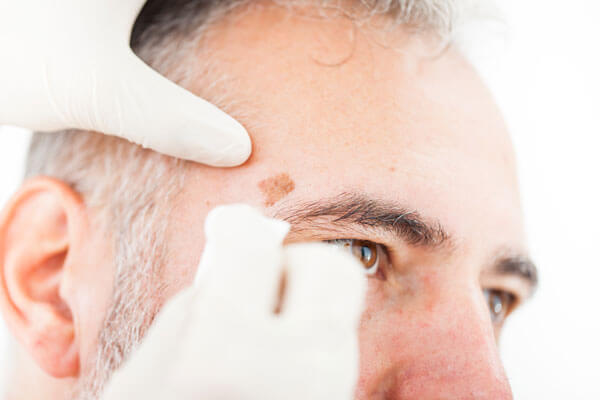
Your pigmentation treatment begins with a consultation: we review your skin, your history of sun exposure, and every medication and product you use — some, like photosensitizing drugs, affect how your skin responds to light, and any medication changes should be directed by your provider rather than made on your own.
On treatment day:
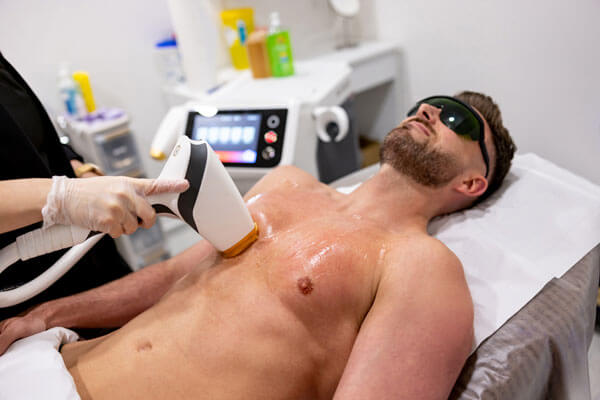
- The skin is cleansed, and protective eyewear is worn
- A cold gel may be applied, and the handpiece is passed over the treatment area
- Patients typically feel a warm, snapping, or stinging sensation — brief and well tolerated, often compared to a rubber band flick
- Sessions are short: a full face or pair of hands may take 15 to 30 minutes
There is no incision, no injection, and no anesthesia needed for most patients. The treatment is genuinely non-invasive — you can expect to return to your day immediately afterward.
Ideal Candidates
You may be an ideal candidate for laser pigmentation treatment if you:
- Have sun spots, age spots, or uneven pigmentation on the face, hands, chest, shoulders, or other areas
- Want faster results than fading creams can provide — the AAD notes that one or two laser treatments can address age spots more quickly than creams, with longer-lasting results
- Have realistic expectations: treatment fades and can remove existing spots, but new spots can form without ongoing sun protection
- Are not pregnant or breastfeeding
- Have no active skin infection or inflammatory condition in the treatment area
- Have no recent tan or sunburn — tanned skin cannot be safely or effectively treated
- Are not taking photosensitizing medications without medical clearance
Patients with melasma need an individualized approach and should discuss options with the provider before committing to laser treatment.
Results: What to Expect and When
One of the advantages of treating pigmentation with laser or IPL is speed: one or two treatments can often address sun spots more quickly than creams, and results tend to last longer. After treatment, the spots typically darken and crust before flaking off over the course of one to two weeks, revealing lighter, clearer skin. Some spots fade incompletely or need additional sessions, and results vary by spot type, depth, and skin tone.
Equally important is what happens next: maintenance. Your spots were created by sun exposure, and the Arizona sun will happily create more. Daily broad-spectrum SPF 30+ sunscreen, protective clothing, and shade are your best long-term partners in keeping results — and preventing new spots from forming.
Downtime and Aftercare
Downtime for pigmentation treatment is minimal, and most patients describe it as social rather than medical: the treated spots look darker and slightly crusty for several days to two weeks as they fade and flake away. You can work and go about your life — but you may prefer to schedule treatment when you do not have a major event that week. Less common risks include crusting, temporary darkening or lightening of the treated skin, and — rarely with conservative settings — burns or pigment changes; your provider will review your individual risk factors at consultation.
Aftercare essentials:
- No direct sun exposure on the treated area; daily SPF 30+ broad-spectrum sunscreen
- Do not pick or scratch crusting spots — let them flake naturally
- Avoid tanning beds, retinoids, and exfoliating products over the treated skin until it has healed
- Skip vigorous workouts for a day or two if the skin feels warm or irritated
Why Choose Heavens Medical in Tempe?
Pigmentation treatment is one of the most technique-sensitive procedures in aesthetic medicine — the wrong settings on the wrong skin type can make discoloration worse. At Heavens Medical, PLC in Tempe, Arizona, your treatment takes place in a physician-led medical practice where Dr. Jason Heavens, a board-certified family physician with more than 25 years of medical experience, provides medical oversight of the practice. We care for patients across Tempe, Mesa, Chandler, Gilbert, Phoenix, and the East Valley, and we build every plan around your skin — not a template.
Pigmentation Treatment FAQs
Many sun spots respond to one to two sessions. More extensive or stubborn pigmentation may take a short series. Your provider will give you a realistic estimate at your consultation.
Most patients feel a warm, stinging, or snapping sensation that is brief and tolerable. No anesthesia is typically required.
Treated spots often fade substantially or completely, though individual results vary and some pigmentation may persist or gradually return. New spots can also form with continued sun exposure. Daily sunscreen and sun protection are essential to maintaining your results.
Melasma requires caution — heat and light can sometimes worsen it. If you have melasma, we will discuss whether a conservative laser approach or an alternative treatment plan is right for you.
It can be, when the right technology and conservative settings fit your case — suitability is assessed individually, and a test spot may be recommended first. Darker skin tones carry a higher risk of pigment changes from light-based treatment, which is why candidacy is confirmed at consultation rather than assumed.
Common areas include the face, hands, chest, shoulders, and arms — wherever sun-driven spots appear.